Space Exploration News
Sep 27, 2017 by News Staff

New research, reported in the journal Nature, changes scientists’ understanding of how terrestrial planets attain their physical and chemical characteristics. A young planetary system. Image credit: NASA / FUSE / Lynette Cook. Planets grow by a process of accretion (a gradual accumulation of additional material) in which they collisionally combine with their neighbors. This is often a chaotic process and material gets lost as well as gained. Massive...

Sep 25, 2017 by News Staff

This striking image of Jupiter was captured by NASA’s Juno spacecraft as it performed its eighth flyby of the giant planet. This image was taken by NASA’s...

Sep 22, 2017 by News Staff

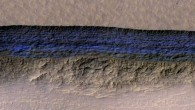
Using data from NASA’s Dawn spacecraft, researchers have found new evidence for the occurrence of ground ice on Vesta, the second largest asteroid of...

Sep 21, 2017 by News Staff

A new study led by Brown University planetary researchers adds three new large members to the list of water ice-filled craters near Mercury’s north pole...

Sep 19, 2017 by Enrico de Lazaro

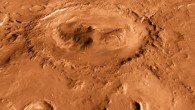
River deposits exist across the Martian surface. A large sedimentary basin named Aeolis Dorsa contains some of the planet’s most spectacular and densely...

Sep 15, 2017 by News Staff

Today, NASA’s Cassini spacecraft made its final approach to Saturn and dove into the gas giant’s atmosphere. Loss of contact with the orbiter took...

Sep 15, 2017 by News Staff

After 20 years in space, NASA’s Cassini spacecraft is nearing the end of its remarkable journey of exploration. NASA will provide live coverage, commentary,...

Sep 15, 2017 by News Staff

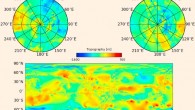
A team of researchers led by Dr. Sander Goossens of NASA’s Goddard Space Flight Center has found evidence that the crust of the Red Planet is not as...

Sep 14, 2017 by News Staff

On September 15, 2017, NASA’s Cassini spacecraft will make its final approach to Saturn, but this encounter will be like no other. This time, Cassini...

Sep 13, 2017 by News Staff

NASA’s Cassini robotic orbiter successfully made ‘goodbye kiss’ flyby of Saturn’s hazy moon Titan on September 11, 2017, at 3:04 p.m. EDT (12:04...

Sep 12, 2017 by News Staff

NASA’s Juno spacecraft successfully made its eighth flyby of the giant planet Jupiter on September 1, 2017, at 5:49p.m. EDT (2:49p.m. PDT, 21:49 UTC). This...

Sep 11, 2017 by News Staff

In a paper published in the journal Nature, Dr. Barry Mauk of the Johns Hopkins University Applied Physics Laboratory and co-authors report observations...

Sep 7, 2017 by News Staff

The International Astronomical Union (IAU), the internationally recognized authority for naming celestial bodies and their surface features, has officially...

Sep 4, 2017 by Enrico de Lazaro

Astronomers working with NASA’s 230-foot (70-m) Deep Space Network antenna in Goldstone, CA, have released the first radar images of the near-Earth asteroid...

Sep 1, 2017 by News Staff

New observations from Akatsuki, a robotic spacecraft launched by the Japan Aerospace Exploration Agency (JAXA) in 2010 to orbit Venus, have revealed an...

Aug 29, 2017 by News Staff

NASA’s Cassini robotic orbiter captured this view of Saturn’s north polar vortex on April 26, 2017, the day it began its Grand Finale, a daring series...

Aug 25, 2017 by James Romero

Surface water ice found within a brilliantly bright crater on the dwarf planet Ceres is being exposed by avalanches reprocessing impact deposits in just...

Aug 22, 2017 by News Staff

A new study led by a Scripps Institution of Oceanography researcher contradicts a recently published paper, which suggested the interior of Earth’s only...

Aug 21, 2017 by News Staff

A new experiment at SLAC National Accelerator Laboratory reveals how large diamonds may be formed from just hydrogen and carbon in the deep interior of...

Aug 21, 2017 by Enrico de Lazaro

A relatively large near-Earth asteroid will safely fly by pur planet on September 1, 2017, according to NASA. (3122) Florence will pass safely by Earth...