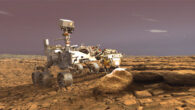
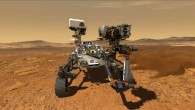
On October 11, 2026, NASA’s Perseverance rover reached 45.22 km (28.1 miles), edging past the 45.16 km (28.06 miles) logged by NASA’s Opportunity rover,...
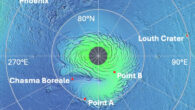
A new analysis of orbital and lander data from Mars suggests the exposed north-polar water ice contains less than 3% dust, far below earlier estimates...
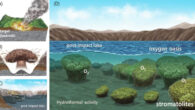
Using data collected by NASA’s Perseverance rover, planetary scientists have revealed that a geologically puzzling formation in Jezero crater experienced...
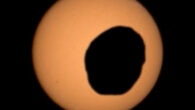
Perseverance has caught the silhouette of Phobos, one of the two Martian moons, sweeping across the solar disk in a fresh transit video from Jezero crater.
This...
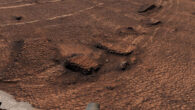
NASA’s Curiosity rover has stumbled on the largest patch of polygon-shaped ground fractures it has ever seen on Mars, a discovery that could reveal more...
A new look at more than two decades’ worth of archival data from NASA’s Spirit mission suggests that the Martian soil may hold iron-bearing minerals...
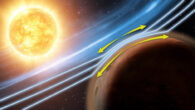
Planetary researchers have found the first evidence that bursts of energetic particles from the Sun could warm the lower atmosphere of Mars during massive...
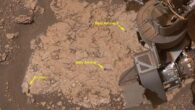
NASA’s Perseverance rover has uncovered the most extensive evidence yet of complex organic molecules on Mars, detecting macromolecular carbon in rocks...
Using data from the ChemCam instrument on NASA’s Curiosity rover, planetary scientists found minerals with high amounts of iron, manganese, and zinc...
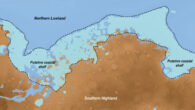
A continent-like shelf beneath the Martian surface hints that a vast ocean once covered up to a third of Mars, reshaping the long-running debate over its...
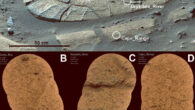
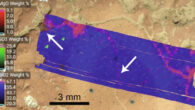
New findings from Neretva Vallis, an ancient river channel that once transported water into Jezero crater on Mars, reveal unusually high nickel levels...
A new analysis of isotopic signatures across planets and meteorite parent bodies suggests our home world formed entirely from inner solar system material,...
Earlier work has demonstrated that an extremophile bacterium species called Deinococcus radiodurans can survive the radiation, cold, and desiccation associated...
New orbital data reveal that the most recently active volcanic systems on Mars weren’t simple one-off blasts into space; instead, long-lived magmatic...
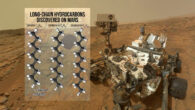
Known non-biological sources, from meteorites to surface chemistry, fall short of accounting for organic compounds detected by NASA’s Curiosity rover,...
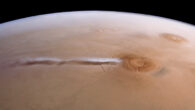
Mars almost certainly once held abundant water. Until now, observations have shown that most atmospheric water loss occurs during the Red Planet’s southern...