Along with armadillos and anteaters, sloths are members of Xenarthra, the only clade of placental mammals to have originated in South America. In new research,...
Euplotes gigatrox, a new species of ciliate collected from a seawater filtration system on the Caribbean Island of Curaçao, can transform into a cannibalistic...
Grape consumption may improve the skin’s barrier against environmental damage by rewriting gene activity, according to new research led by Western New...
Scientists have extracted and analyzed proteins from the tooth enamel of six Homo erectus individuals who lived in China roughly 400,000 years ago, offering...
A large genetic survey reveals that the country’s so-called ‘wild dogs’ remain predominantly dingo, reshaping debates over conservation and wildlife...
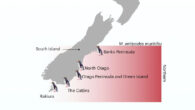
For decades, scientists treated the yellow-eyed penguin (Megadyptes antipodes) as a single species split into two broad populations. A new genomic study...
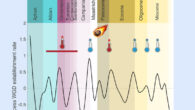
A new analysis of 470 flowering plant species finds that whole-genome duplication surged precisely during Earth’s violent environmental crises, suggesting...
Using environmental DNA (eDNA) collected from waters more than 4 km deep off Western Australia’s Nyinggulu (Ningaloo) coast, researchers identified a...
New research reveals that 3.4 billion years ago (Archean Eon), ancient microbes relied on molybdenum — a metal that was vanishingly rare at the time...
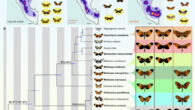
A landmark study of several butterfly lineages and a day-flying moth in South America shows that convergent evolution — when unrelated species arrive...
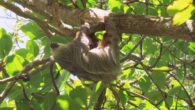
A comprehensive genome-wide analysis of Amazonian two-toed sloths (genus Choloepus) suggests the animals are more genetically diverse than once believed,...
In the lightless depths of the Gulf of Alaska, approximately 3,251 m (two miles) below the surface, a softball-sized golden object clinging to a rock left...
In a large clinical trial, Tufts University researcher Bess Dawson-Hughes and colleagues found that vitamin D supplements reduced diabetes risk only in...
Mitochondrial DNA (mtDNA) from eight fossils found in Stajnia Cave in Poland reveals a tight-knit group of Neanderthals who lived about 100,000 years ago,...
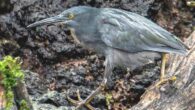
The Galápagos lava heron, a small heron that stalks the lava-strewn shores of the Galápagos Islands, Ecuador, may finally have secured its place as a...
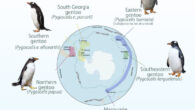
Scientists have extracted and analyzed DNA from 216 canid remains, including 181 from Paleolithic and Mesolithic Europe. The oldest data that they recovered...
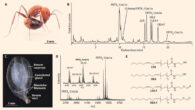
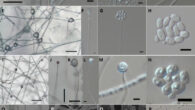
A team of researchers from the United States and Germany has identified fungal proteins that can freeze water at relatively warm subzero temperatures,...
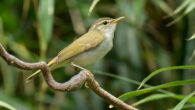
Genetic and acoustic evidence show that the rare Ijima’s leaf warbler (Phylloscopus ijimae) is actually two distinct bird species, including the newly-identified...