Other Sciences News

Jun 28, 2016 by News Staff

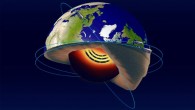
The popping and crackling sounds associated with Aurora borealis (or the Northern Lights) are born when the related geomagnetic storm activates the charges that have accumulated in the atmosphere’s inversion layer causing them to discharge, according to researchers at Aalto University, Finland. Aalto University scientists find explanation for auroral sounds. Image credit: Unto Laine / Aalto University. In 2012, Prof. Unto K. Laine of Aalto University...

Jun 20, 2016 by News Staff

Beverages surpassing 149 degrees Fahrenheit (65 degrees Celsius) may increase the risk of tumors in the esophagus, which resides in the chest area below...

Jun 17, 2016 by News Staff

A new study in the journal Current Biology shows that physical exercise after learning improves memory and memory traces, but only if the exercise is done...

Jun 15, 2016 by News Staff

An international team of researchers has found that chilling roasted coffee beans before grinding results in narrower distribution of small particles,...

Jun 13, 2016 by News Staff

A new study contradicts the claim that LB1, the type specimen of Homo floresiensis, had Down syndrome, and further confirms its status as a valid and distinct...

Jun 10, 2016 by News Staff

More than 80 percent of the world and more than 99 percent of the U.S. and European populations live under light-polluted skies, according to a study and...

Jun 10, 2016 by Enrico de Lazaro

A team of scientists in Germany has developed a compound that can transform infrared into warm, white-colored light. The new compound emits a broadband...

Jun 9, 2016 by News Staff

Nihonium (Nh), moscovium (Mc), tennessine (Ts) and oganesson (Og) are the new names of chemical elements 113, 115, 117 and 118 on the periodic table. Periodic...

Jun 9, 2016 by News Staff

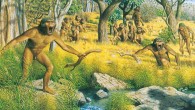
New hominin fossils from the Indonesian island of Flores shed light on the origin of the mysterious ‘hobbit’ species, Homo floresiensis. Hominin remains...

Jun 7, 2016 by Enrico de Lazaro

Evidence from bison fossils has enabled researchers to shape a more accurate timeline for the so-called ‘ice-free corridor’ — a route for Pleistocene...

May 25, 2016 by News Staff

Powerful coronal mass ejection events from the young Sun may have provided the crucial energy needed to warm early Earth, according to a team of researchers...

May 16, 2016 by News Staff

A new study led by Anglia Ruskin University researcher Prof. Viren Swami shows that people who believe in conspiracy theories (420 U.S. adults were sampled)...

May 12, 2016 by News Staff

Neanderthals showed signs of nutritional stress during periods of extreme cold, according to a new study published in the July 2016 issue of the Journal...

May 12, 2016 by News Staff

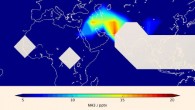
An international team of researchers from Australia and the United Kingdom has made a surprising discovery about the chemistry of Earth’s upper atmosphere...

May 11, 2016 by Enrico de Lazaro

An international team of genetic researchers from the United States and Europe has found new evidence that there was an Ice Age refugium in southern Arabia. Spatial...

May 10, 2016 by News Staff

Atmospherically transported dust from the Sahara Desert, the largest desert in the world, is bringing iron and other nutrients to underwater plants in...

May 4, 2016 by Natali Anderson

A team of researchers at the University of Cambridge, UK, has developed a nanoscale engine — just a few billionths of a meter in size — which...

May 4, 2016 by News Staff

Three teams of scientists have taken a detailed look into the biogeochemistry, geophysics and geology of subglacial Lake Whillans, which lies 2,600 feet...

May 3, 2016 by News Staff

Analyses of genome-wide data from 51 Eurasians from 7,000 – 45,000 years ago reveal two big changes in prehistoric human populations that are closely...

Apr 29, 2016 by News Staff

A team of neuroscientists and psychologists at the University of California, Berkeley, has created a detailed ‘semantic atlas’ showing which human...