Pierolapithecus catalaunicus is an extinct species of great ape that lived in what is now Europe about 12 million years ago. A remarkably complete, although...
New research from Guangzhou University and South China Normal University reveals neural mechanisms underlying the transmission of adolescent anxiety to...
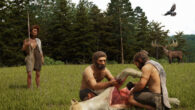
Anthropologists in Greece have used facial reconstruction techniques to show how Homo heidelbergensis, a poorly understood relative of Neanderthals that...
During the Upper Paleolithic, lions become an important theme in Paleolithic art and are more frequent in anthropogenic faunal assemblages. However, the...
Human brain constantly combines multisensory information from our surrounding environment. Odors for instance are often perceived with visual cues; these...
Traditionally, paleoanthropologists believed that humans arrived in North America around 16,000 to 13,000 years ago. Recently, however, evidence has accumulated...
In a new clinical trial, scientists from the University of Michigan, Ann Arbor and the University of Colorado School of Medicine found that oral administration...
In recent years, exploring natural compounds with functional properties to ameliorate aging-associated cognitive decline has become a research priority...
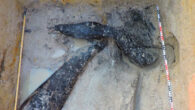
Archaeologists have found an ancient wooden structure at the archaeological site of Kalambo Falls in Zambia. This structure — dated to about 476,000...
Namibia is rich in hunter-gatherer rock art from the Later Stone Age. This is a tradition of which well-executed engravings of animal tracks in large numbers...
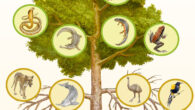
Mass extinctions during the past 500 million years rapidly removed branches from the tree of life and required millions of years for evolution to generate...
New evidence from three tracksites on South Africa’s Cape coast suggests that early humans may have worn footwear while traversing dune surfaces during...
An international team of scientists has developed a specific mathematical model that closely matches how a human brain works when it comes to reading vision....
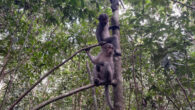
Early humans and apes likely evolved free-moving shoulders and flexible elbows to slow their descent from trees as gravity pulled on their heavier bodies,...
Ferroptosis, which is caused by a buildup of iron in cells, appears to be a major mechanism of white matter injury in Alzheimer’s disease and vascular...