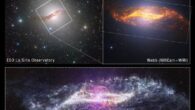
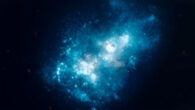
Celebrating four years of science, the NASA/ESA/CSA James Webb Space Telescope has pierced the thick dust of the giant galaxy Centaurus A to reveal its...
People who naturally stay up late may be more prone to obesity and poorer metabolic health in part because they consume more of their daily calories late...
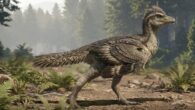
Paleontologists in China have described a small, previously unknown Jurassic bird whose short tail offers new evidence for how the earliest birds traded...
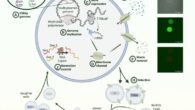
In an analysis of 390 traditionally cultivated cacao trees representing traditional Amazonian varieties, researchers identified four previously unknown...
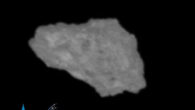
On July 2, 2026, the Tianwen-2 probe closed to within 20 km (12.4 miles) of the small near-Earth asteroid 2016 HO3, one of only seven Earth quasi-satellites...
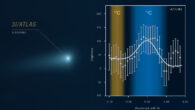
Astronomers using ESO’s Very Large Telescope (VLT) have measured carbon and nitrogen isotope ratios in 3I/ATLAS, the third known interstellar visitor...
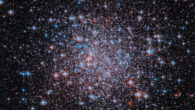
Astronomers using the NASA/ESA Hubble Space Telescope have captured this vivid image of NGC 6426, an ancient globular cluster in the Milky Way’s outer...
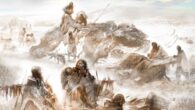
New research suggests that the first widespread human cultures in the Americas were not opportunistic foragers who ate whatever they could find, but specialized...
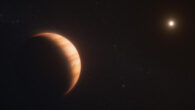
Astronomers using the NASA/ESA/CSA James Webb Space Telescope have analyzed the atmosphere of a massive exoplanet orbiting the white dwarf WD 1856+534....
For decades, the discovery of stone spear points lying next to proboscidean (mammoth, mastodon, and gomphothere) bones has been treated as archaeology’s...
When paleoanthropologists announced the discovery of Homo floresiensis on the Indonesian island of Flores in 2003, the tiny, small-brained species quickly...
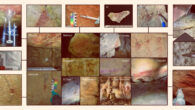
For the first time, researchers have extracted ancient human DNA directly from the walls of a cave. Although their results do not conclusively link ancient...
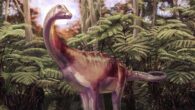
A small fossil collected on an Antarctic island more than four decades ago is a tail vertebra of a titanosaurian sauropod dinosaur that roamed Antarctica...
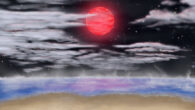
Astronomers have discovered a rocky exoplanet about twice Earth’s size just 25 light-years away, orbiting in the habitable zone of its parent star, Gliese...