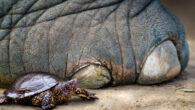
New evidence from Germany suggests Neanderthals captured European pond turtles (Emys orbicularis) around 125,000 years ago, likely valuing their shells...
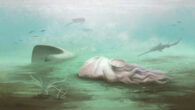
Pohlsepia mazonensis, a cephalopod species first described in 2000 from a 300-million-year-old specimen and featured in the Guinness Book of Records as...
Deep inside a limestone cave in western Cuba, paleontologists have found the most complete ichthyosaur skeleton yet found on the island.
Ophthalmosaurid...
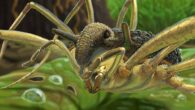
In a paper published online March 18 in the journal Acta Palaeontologica Polonica, paleontologists described a new species of harvestman found in two pieces...
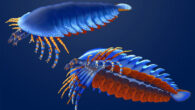
Paleontologists at Harvard University have described a large predatory arthropod from the Middle Cambrian of Utah featuring massive three-segmented chelicerae....
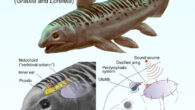
An analysis of two 240-million-year-old coelacanth fossils suggests a bizarre sensory adaptation: an ossified lung that transmitted sound to the inner...
Paleontologists have identified a new genus and species of fossil ape that lived about 17-18 million years ago in northern Egypt. The discovery suggests...
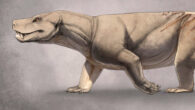
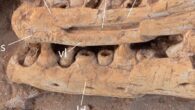
Known from a single skull discovered in South Africa in 1952, Cistecynodon parvus has been shuffled across the evolutionary tree: described at various...
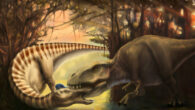
A semi-complete skull of an adult Edmontosaurus at Montana State’s Museum of the Rockies preserves a fleeting moment from the Late Cretaceous: a tyrannosaur...
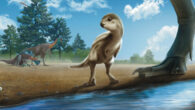
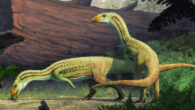
A new species of small plant-eating dinosaur has been identified from a partial skeleton of a juvenile individual discovered in the Republic of Korea.
An...
Paleontologists have described a new species of enigmatic cyclidan crustacean on the basis of three well-preserved specimens from the Early Triassic Guiyang...
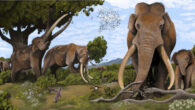
Chemical clues preserved in the teeth of straight-tusked elephants (Palaeoloxodon antiquus) from the 125,000-year-old site of Neumark-Nord in Germany suggest...
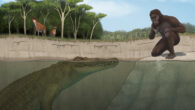
Paleontologists analyzing fossils from Ethiopia have described a previously unknown crocodile species that shared the landscape with a hominid species...
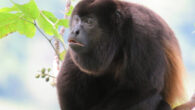
Fossil jaws of the ancient monkey species Stirtonia victoriae from the La Victoria Formation in Colombia suggest that a shift toward leaf-eating allowed...
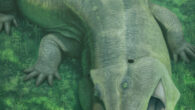
A new genus and species of archaic stem tetrapod from the Permian period has been identified from fossil jawbones found in Brazil. Named Tanyka amnicola,...
Fossils from the Chinle Formation of Petrified Forest National Park in Arizona, the United States, reveal that Sonselasuchus cedrus, a species of shuvosaurid...
Paleontologists have identified a new, giant species of the mosasaur genus Pluridens from the Late Cretaceous phosphate deposits of Morocco. Named Pluridens...
A 7.2-million-year-old thigh bone unearthed at the fossil site of Azmaka in southern Bulgaria displays a mosaic of features suggesting a unique combination...
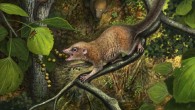
The newly-discovered minuscule fossils of Purgatorius — a shrew-sized mammal considered the earliest known relative of all primates, including humans,...