Astronomy News

Jan 15, 2026 by News Staff

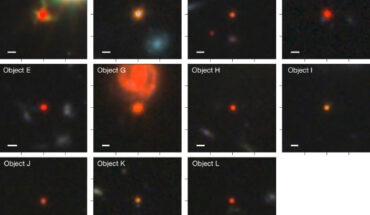
Astrophysicists at the University of Copenhagen show that the enigmatic ‘little red dots’ — red sources scattered across images of the early Universe — are rapidly growing black holes wrapped in ionized gas, offering new insight into how supermassive black holes formed after the Big Bang. Little red dots are young supermassive black holes in dense ionized cocoons. Image credit: NASA / ESA / CSA / Webb / Rusakov et al., doi: 10.1038/s41586-025-09900-4. Since...
Jan 14, 2026 by News Staff

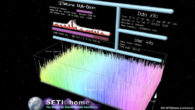
SETI@home, the pioneering distributed-computing project launched in 1999 that enlisted millions of volunteers to analyze radio signals from space, produced...

Jan 13, 2026 by Enrico de Lazaro

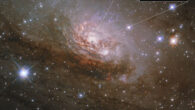
Astronomers using NASA’s James Webb Space Telescope have captured the most detailed infrared view yet into the center of the Circinus Galaxy, one of...

Jan 13, 2026 by News Staff

Using the high resolution images from the NIRCam (Near-InfraRed Camera) instrument onboard the NASA/ESA/CSA James Webb Space Telescope, astronomers have...

Jan 12, 2026 by News Staff

Physicists from the Center of Applied Space Technology and Microgravity at the University of Bremen and the Transylvanian University of Brașov have unveiled...

Jan 12, 2026 by News Staff

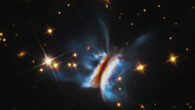
Using ESO’s Very Large Telescope (VLT), astronomers have captured a breathtaking shock wave around the white dwarf star 1RXS J052832.5+283824 (RXJ0528+2838...

Jan 12, 2026 by News Staff

New multi-year observations from the NASA/ESA Hubble Space Telescope and ground-based telescopes at the Fred Lawrence Whipple Observatory and Roque de...

Jan 9, 2026 by News Staff

Astronomers have detected an extraordinary asteroid, named 2025 MN45, in early data from the Legacy Survey of Space and Time (LSST) Camera — the...

Jan 8, 2026 by News Staff

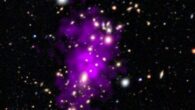
New observations of the young cluster SPT2349-56 with the Atacama Large Millimeter/submillimeter Array (ALMA) have revealed unexpectedly scorching intracluster...

Jan 6, 2026 by Enrico de Lazaro

Astronomers using the NASA/ESA Hubble Space Telescope have confirmed the existence of starless, hydrogen-rich objects dominated by dark matter. Named Reionization-Limited...

Jan 5, 2026 by News Staff

A population of free-floating planets is known from gravitational microlensing surveys. None have a directly measured mass, owing to a degeneracy with...

Jan 5, 2026 by Enrico de Lazaro

Astronomers have released the new results from the CAFFEINE survey, shedding new light on a long-standing mystery: what controls the efficiency of star...

Jan 2, 2026 by News Staff

Astronomers discovered an enormous galaxy cluster called RM J130558.9+263048.4 on December 31, 2020; the date, combined with the bubble-like appearance...

Dec 30, 2025 by Natali Anderson

An international team of astronomers from Chile, Europe, the United States, Canada and New Zealand has captured the most detailed spectroscopic glimpse...

Dec 29, 2025 by News Staff

A rare trio of merging galaxies called J121/1219+1035 hosts three actively feeding, radio-bright supermassive black holes, according to a team of U.S....

Dec 29, 2025 by Enrico de Lazaro

This new image from the NASA/ESA Hubble Space Telescope shows a portion of the N159 star-forming complex in the Large Magellanic Cloud, a dwarf galaxy...

Dec 23, 2025 by News Staff

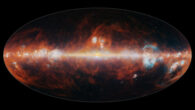
NASA’s SPHEREx (Spectro-Photometer for the History of the Universe, Epoch of Reionization, and Ices Explorer) space telescope has completed its first...

Dec 23, 2025 by Enrico de Lazaro

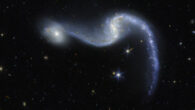
This new image from ESA’s Euclid space telescope shows two large galaxies: NGC 646 and NGC 646b. They look like neighbors, but they’re actually about...

Dec 23, 2025 by News Staff

The protoplanetary disk around IRAS 23077+6707, a young star located roughly 1,000 light-years away, is unexpectedly chaotic and turbulent, with wisps...

Dec 22, 2025 by News Staff

Using the WISPR (Wide-Field Imager for Solar Probe) instrument aboard NASA’s Parker Solar Probe, scientists observed the interstellar comet 3I/ATLAS...